Confluence Alternatives for Teams Going All-In on Agents
Jul 18, 2026
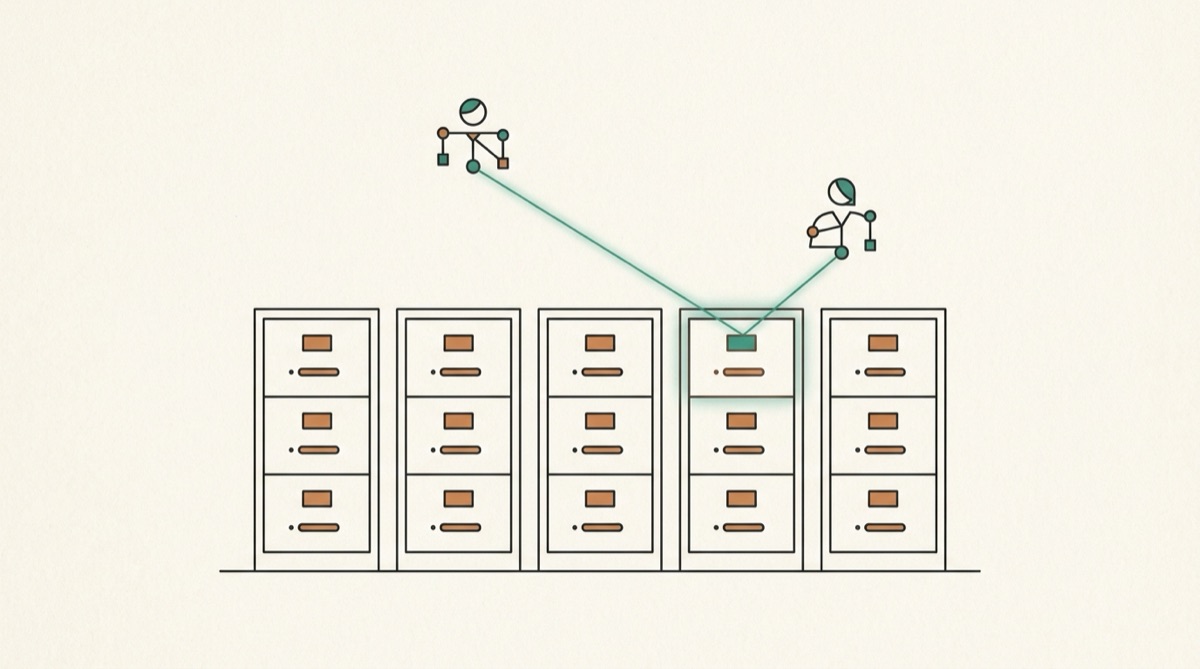
Search "confluence alternatives" and almost every list answers the same question: where else can your team write and read docs? Notion, Slite, GitBook, Guru — good tools, all built for humans opening a page and reading it. That was the right question for the last decade. It's the wrong one if your team is going all-in on AI agents, because there's a second axis nobody scores: which of these tools actually serve your context to the agents doing the work.
This piece keeps the human-readability comparison — you still need it — and adds the axis the roundups skip.
The axis every Confluence alternatives list skips
A wiki's job used to end at the human. Someone wrote the page, someone else read it, and the value transferred between two people. Agents change the shape of the problem, not its nature. This isn't really an AI problem. It's the same knowledge-sharing challenge teams have always had — how do you get the things your best people figured out into everyone else's hands? We just happen to be hitting it again with a new category of work.
The new wrinkle is the reader. When an agent drafts your release note or answers a customer, it needs the same things a new hire needs: your brand voice, who your customers are, how you actually do the work, and which decisions still stand. If that lives in a wiki no agent can read — or can only read as flat, unmanaged text — you've documented your context for people and starved it for machines.
So the real question behind "best company wiki alternative" — or "AI knowledge base alternative" — is really two questions:
- Is it a good place for people to write and find things?
- Does it serve that context to your agents, and keep it current?
Most tools answer the first well and the second barely.
The usual suspects, compared honestly
These are the names that dominate the roundups, at common-knowledge level (check current docs before you buy — AI features move fast):
- Confluence — the incumbent. Deep Atlassian and Jira integration, strong permissions, mature. Atlassian has been adding AI (Rovo / Atlassian Intelligence, as of mid-2026), but the core model is a human wiki.
- Notion — the popular all-in-one. Docs plus databases, flexible, an open API, and Notion AI built in. Genuinely more agent-aware than most — though the AI still feels layered on top of a docs product rather than built around agents.
- Slite — a cleaner, more opinionated team knowledge base with an AI assistant for asking questions of your docs. Good for humans who hate wiki sprawl.
- GitBook — docs-first, markdown- and git-friendly, popular for technical and product documentation. Developer-leaning, has an API.
- Guru — knowledge management with verification workflows (cards get "verified" by an owner) plus AI answers, often surfaced in-browser or in Slack. Strong on trust and freshness for support and CS teams.
All five are real, defensible choices for the human question. Side by side:
| Tool | Best for (humans) | Actively manages context for agents | Agent access |
|---|---|---|---|
| Confluence | Jira-heavy orgs, enterprise wikis | No | API; AI features maturing |
| Notion | Flexible all-in-one workspaces | Partial — AI feels tacked on | Open API, Notion AI |
| Slite | Clean team knowledge base | No | AI assistant over your docs |
| GitBook | Technical & product docs | No | API, git-sync |
| Guru | Support/CS, verified answers | Verification is for humans | AI answers, integrations |
| Patina | Teams whose agents do the work | Yes — curated, with review | Web + API + MCP |
Read that last column slowly. "Notion and Confluence are where context goes to die for agents" is a fair jab. Notion is doing more with agents now, but it feels tacked on — there's no active management around the agents or the knowledge itself. A search box and an AI panel bolted onto a docs product is not the same as a system whose job is to keep your context correct and feed it to whatever's running.
What "serving context to agents" actually means
Two things, and both are easy to underrate.
First — and this is the part wikis structurally can't do — active management. The line between a knowledge base and a company brain is curation. A brain curates both the index and the content itself. Otherwise it's just a knowledge base, and knowledge bases get stale. Concretely: when you reverse a decision you made three weeks ago, someone (or something) has to mark the old one superseded. If nobody does, one agent run picks up the new decision and the next run picks up the old one, and your output goes quietly inconsistent. Managing context means managing decisions, not just documents. No amount of full-text search fixes that.
Second, access. Agents live in different places — a CLI, a coding tool, Claude on the web, your own scripts. Serving context means the same knowledge is reachable through more than one door: a web UI for people, an API for your automations, and MCP for agents that self-discover what's available. One home, many readers. Access is the easier half — plenty of tools have an API — which is exactly why it shouldn't lead your comparison.
This is why prompt libraries and "our best prompts" Notion pages don't hold up over time. Prompt libraries are the 2010 approach to AI workflows; context infrastructure is the 2025-and-later approach. A prompt tells an agent how to phrase something. It doesn't tell the agent what your business is.
Where Patina fits — and where it doesn't
Patina is not another wiki, and pitching it as a straight Confluence replacement would miss the point. It's the agent-native option: one shared home for the context your agents read from — brand voice, personas, playbooks, and the decisions actually in force — served over web, API, and MCP, and human-curated with a review workflow so what agents read is what you approved — with every approval on the record, so knowledge can show what it drew on, who let it in, and whether the decision behind it still stands (the receipts).
If your team mostly needs a place for people to read handbooks and meeting notes, keep your wiki; the tools above are good at that. If you've noticed the same agent giving wildly different output depending on who runs it — because the model is the same and the context isn't — that's the gap Patina fills. It pairs naturally with a real agentic knowledge base strategy, and if you're specifically weighing Notion, our Notion alternatives for AI-native teams comparison goes deeper on that one.
It's $79/mo, self-serve — see pricing. The honest summary: use a wiki for your people, and give your agents one context home they all read from, so every agent sounds like your company no matter who runs it.