Your AI agents should know your company inside-out
Patina is the shared brain for your team and agents. It's one place agents can read from. So, they always know what's current and can do real work.
Free for 14 days · $149/mo after · Cancel any time
We speak plainly to ops leads: direct, concrete, never salesy. Claims come with numbers or they don’t ship.
Your agents are only as good as what they know.
An agent without the context of your business gives you generic output. It might be competent and safe. But it is also interchangeable with any other company. This leads to wasted time rewriting and re-explaining your business in every prompt. And, depending on who ran the task, the quality can be wildly different.
Give the same agent the same brief with your company context, and now the output changes. Now it knows your brand voice, personas, playbooks. It has knowledge of the decisions you’ve made. So the quality is higher, there's less re-work for your team.
“Draft the Q2 campaign brief.”
Nothing attached
“Here’s a draft campaign brief for your product launch. Position the product as innovative, highlight the key features and benefits, and target decision-makers in your market.”
Generic enough to be any company’s. You’d rewrite it.
“Draft the Q2 campaign brief.”
“Here’s the Q2 brief for the analytics launch, aimed at ops leads at Series B logistics firms, in your plain, no-hype voice, leading with your ‘visibility without the busywork’ positioning.”
Sounds like your team wrote it. Ready to use.
Read more about why context beats a bigger model: why we built Patina →
One platform
A knowledge base that doesn’t go stale.
A folder of docs or a traditional wiki goes stale. Your business changes: thinking evolves and decisions get re-written. But the documented knowledge doesn't: last year’s decisions sit next to this year’s. Eventually nobody trusts any of it.
Patina manages and maintains your company knowledge to stay current.

What your company knows
The AI knowledge base
Voice, personas, playbooks, and decisions recorded with the why attached. Structured, versioned, and stored as plain readable files, built for agents to read: each one retrieves just the context relevant to its job.
Inside the knowledge base →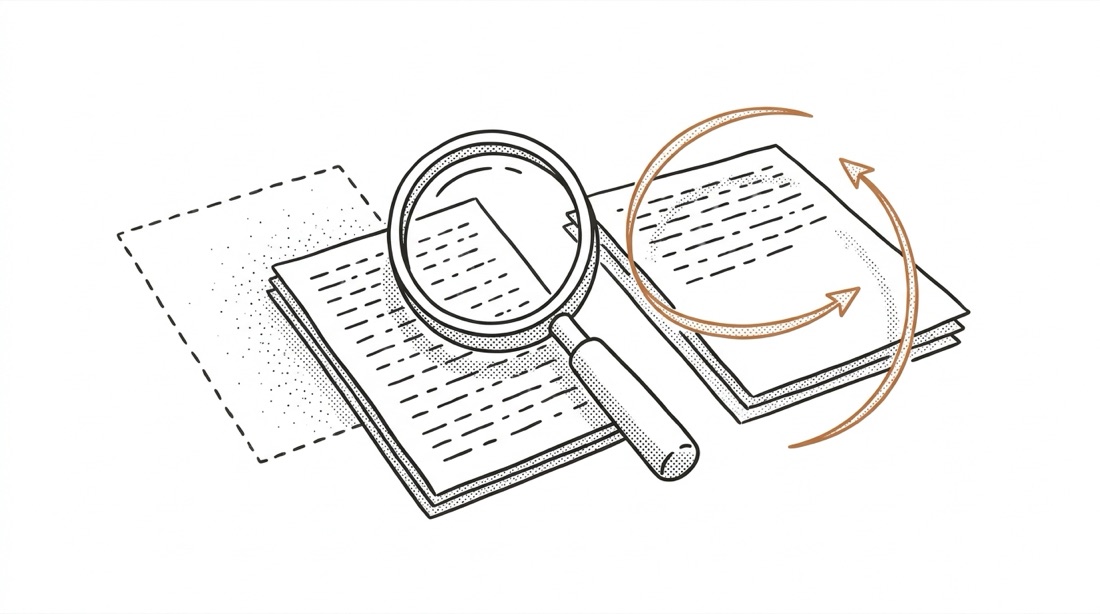
How it stays current
The AI memory
Patina mines what agents learn on the job into candidate memories, and a nightly sweep flags stale, superseded, and orphaned knowledge with proposed fixes. Nothing lands without review.
How AI memory works →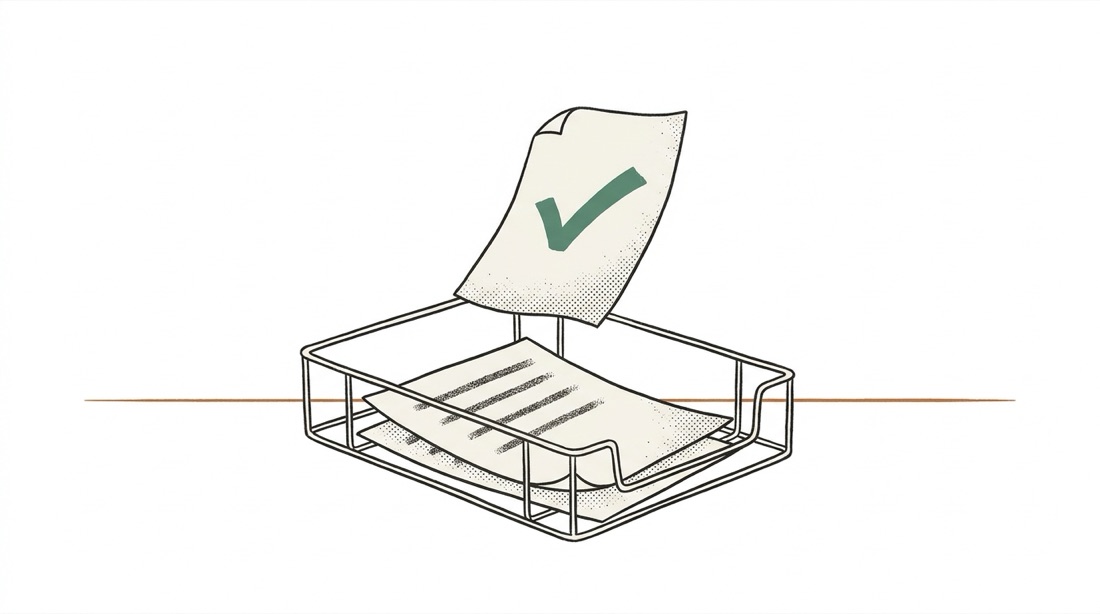
Why you can trust it
Review & approval
Agent learnings, memory fixes, and teammate edits all arrive as proposals, and every yes goes on the record.
Inside review & approval →Weighing us against Notion, a Claude project, or a prompt library? See the full comparison.
That’s how the brain compounds. Here’s how it runs.
How it works
Every job leaves it smarter.
It takes in what you know
Start with an import: the brand deck, persona docs, SOPs, call transcripts. From there the intake never stops. Connect a Slack channel, an Instantly campaign, or any URL, and what happens there keeps flowing in as new source material. Patina holds it all as plain readable pages your team can open like any doc.
Your agents work from it
Your content lead asks Claude for a Q2 campaign brief. Before writing a word, Claude pulls the approved brand voice, the target persona, and the positioning decision you made in March, just the pieces relevant to this job. The draft comes back sounding like your team wrote it, whoever ran it. (Agents connect once, through the CLI, MCP, or API. Your team never touches that side.)
We speak plainly to ops leads: direct, concrete, never salesy.
Patina keeps it current
Maintenance doesn’t wait for someone to remember. Your agents propose updates when they learn something mid-job: Claude notices the positioning doc contradicts what sales says on calls, and files the change with the transcript attached. The AI memory works in the background too: it mines what happened into candidate memories and flags stale or conflicting knowledge, each flag carrying a proposed fix. Every change, from either source, lands in your review queue as a side-by-side. Approve it and the library moves forward. Reject it and nothing changes.
Every yes adds up.
Each approved proposal means the next run starts further ahead: the brief that needed three rewrites in month one needs none by month three, because everything your team fixed along the way stayed fixed. In a chat window, what an agent learns about your business disappears when the tab closes. Here it stays.
Your team reviews two kinds of knowledge:
Facts about your business
Voice rules, personas, positioning, decisions recorded with the why.
Facts keep output on-brand.
Know-how
Playbooks, SOPs, and checklists. An ops agent hits an exception its fulfillment playbook doesn’t cover, proposes the fix, the operator approves it, and every run after follows the new process.
Know-how is the compounding engine: every agent runs your process the way your best person runs it, and keeps running it that way after they’ve moved on.
Review isn’t a second inbox: proposals arrive batched, each a side-by-side of what changed with the source right there. If review stalls for a week, nothing rots. Agents keep working from the last approved version while proposals wait.
When two sources disagree, Patina flags the conflict for your team to settle. As the library grows, Patina proposes the reorganization the same way it proposes everything else.
Start your free trial · 14 days, cancel any time
The app
Your team already knows how to use this.
Patina is designed to be used by your team, no engineers required. If they can use a doc tool, they can use this: no terminal, no config, nothing to learn that a review screen doesn’t teach.
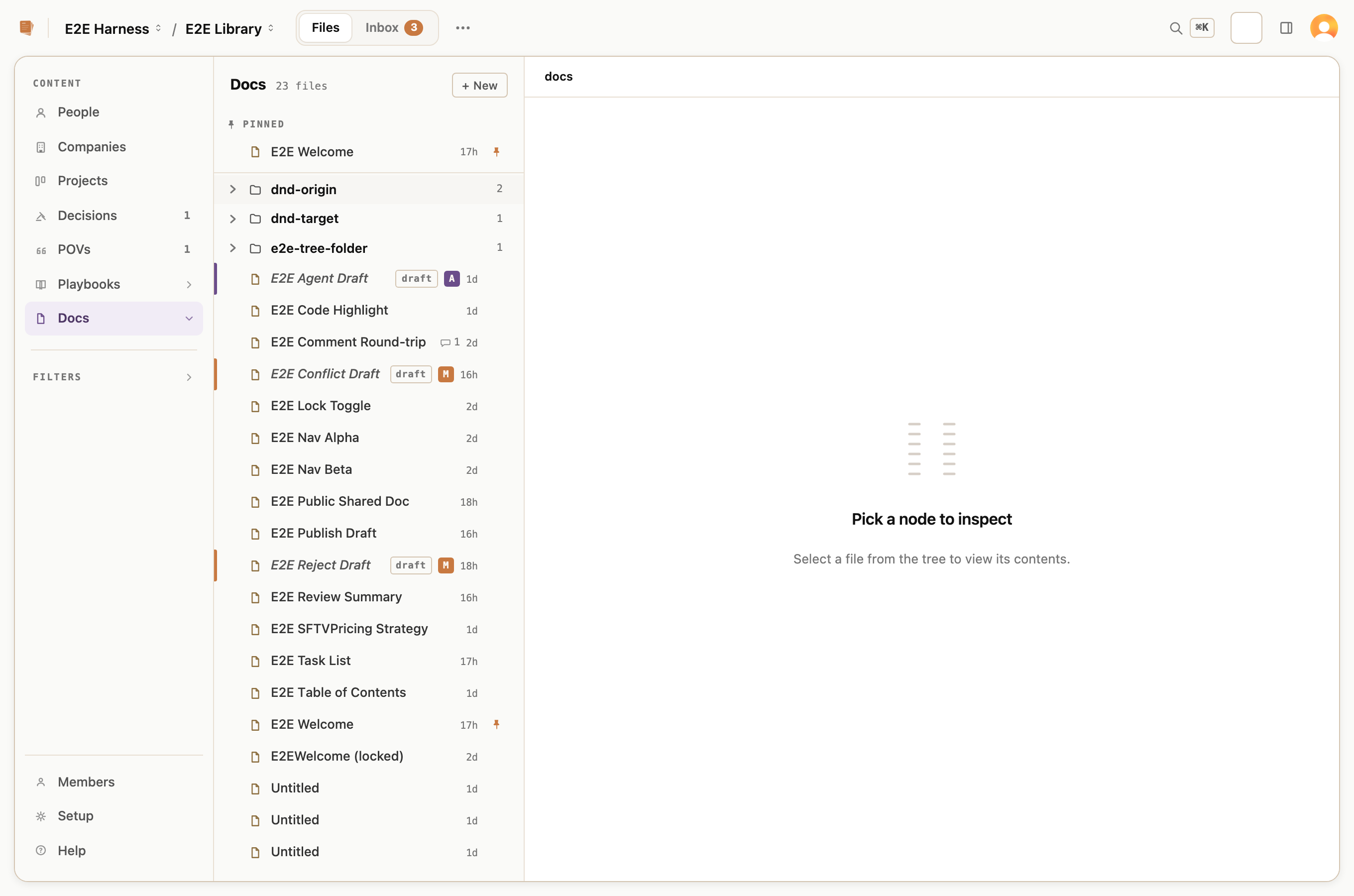 Playbooks, docs, and decisions togetherDraft vs. approved at a glanceClick into anything
Browse your team’s context
Every playbook, decision, persona, and doc your agents rely on, organized in one workspace instead of scattered across chats and drives.
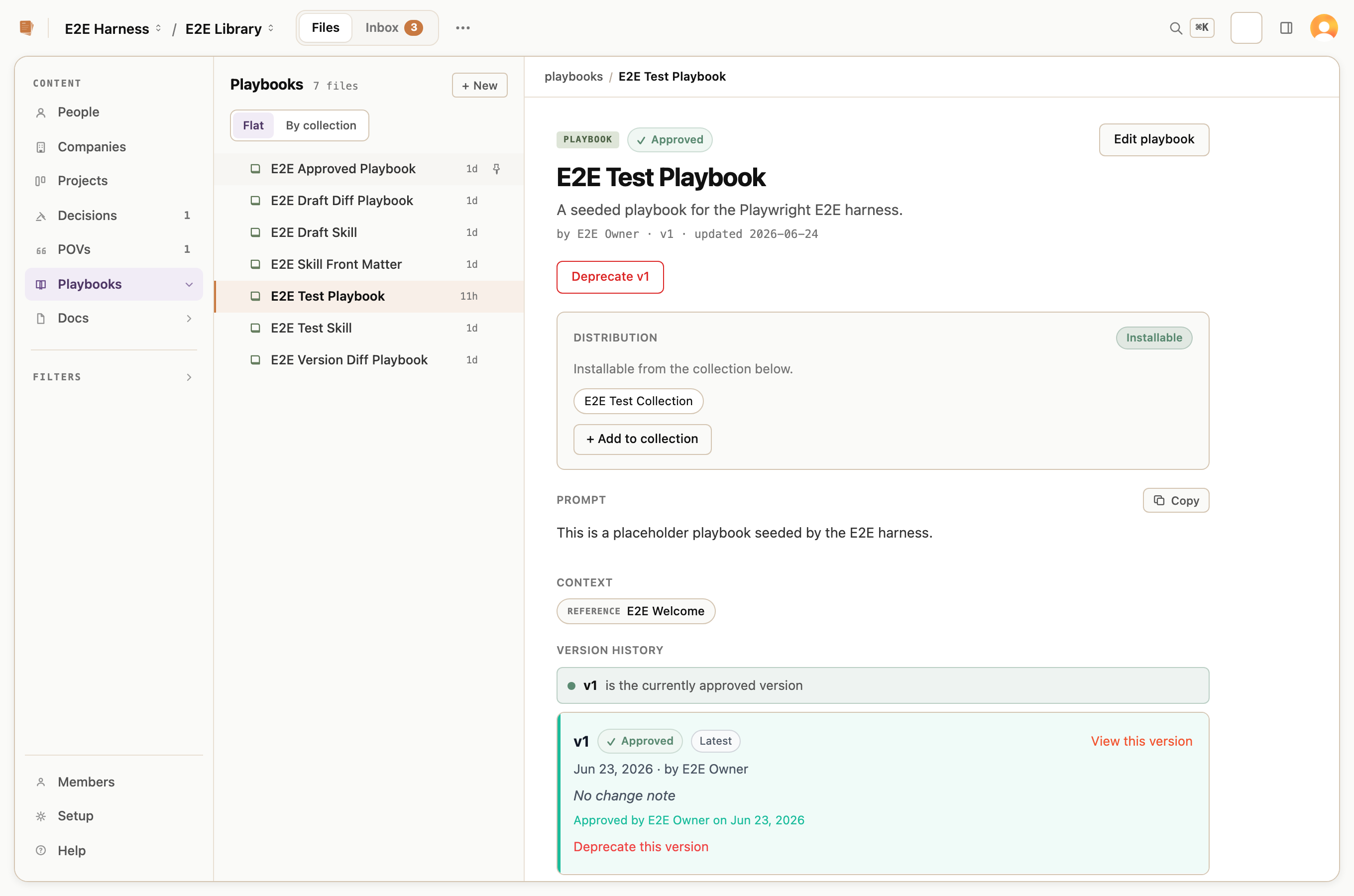 Approval statusAttached contextEvery version kept
See what a playbook draws on
The instructions, the context attached to them, and the approval history, so anyone on the team knows which version to trust without asking.
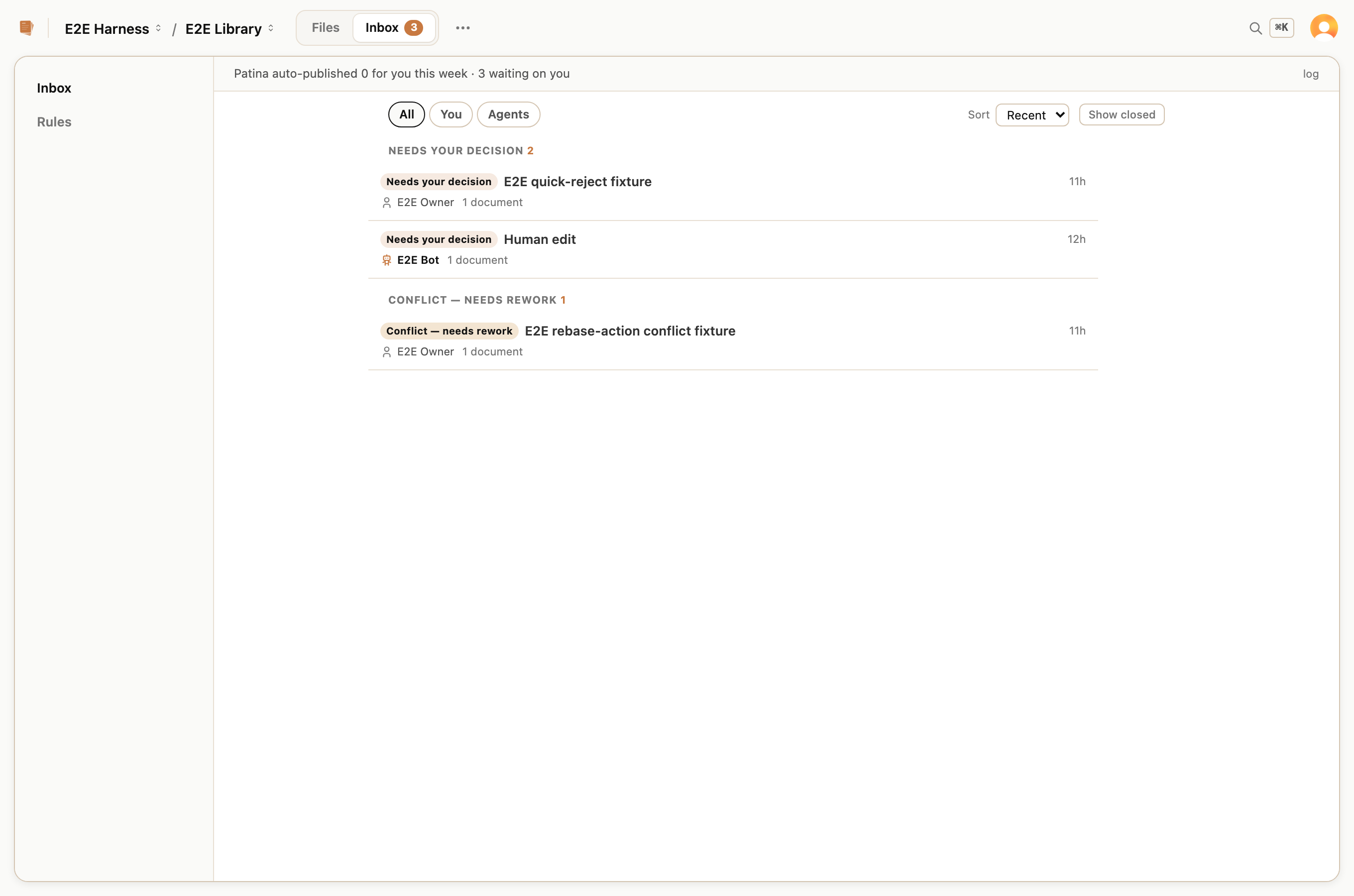 Needs your decisionAgent vs. human submitterConflicts flagged for rework
Approve changes in one place
Human and agent edits land in the same queue. Approve, reject, or send back for rework. Nothing becomes company truth without a decision.
Who it’s for
A brain for your team, your clients, or your whole company.
One team, one business, and too much of how it runs lives in individual heads. You’ve probably watched the fixes fail, too: the prompt library nobody updated after week two, the AI-tips channel that went quiet. They died because keeping them current was a job nobody had. Patina makes continuity the default: what your team approves stays put, whoever wrote it and whoever runs the next agent.
- Handoffs survive: what your best people know lives in the workspace, not in their heads.
- Settled stays settled: once your team approves a decision, agents cite it instead of reopening it.
- On-brand, whoever runs it: output sounds like you whether your lead or the newest hire runs the agent.
What your best people know doesn’t leave when they do.
Works with the agents you already run
If an agent can read files, it can work with Patina: Claude, Codex. Connecting one is a one-time step. Ask Claude to install it.
Get started by adding what your business already has written down. You can start with one file or workflow. Connecting Patina to your agents is easy. Once setup Patina does the maintenance.
If you have technical folks, there’s a CLI, an API, and an MCP server. If you don’t, none of that is for you. The technical side is for your agents, not your team; your people work entirely in the review screen you saw above.
Your data stays simple too:
- Workspaces are isolated: what one workspace holds, no other workspace can see.
- Your content stays yours: we don’t train models on it.
- Everything is plain files: export your whole library as markdown any time.

Pricing
Pay for usage, not seats.
Patina is $149 a month, flat: unlimited team members, playbooks, and docs, with no per-seat pricing. On top of that, prepaid credits cover the AI work Patina itself does for you (the memory sweeps, the proposed fixes) and nothing else. Your agents read the library free: we don’t charge for calls against our API, and their AI costs stay on the accounts you already pay for.
per account · billed monthly
Unlimited playbooks, team members, and docs. Full approval workflows, versioning, and an API your agents read from while they work.
Start your 14-day free trialNothing charged until your trial ends
- Unlimited playbooks
- Unlimited context docs
- Unlimited members
- Approval workflow
- Full versioning
- Import & fork
- Retrieval API
- Sources & citations
- MCP + CLI access
- Decision log
- Unlimited collections
- Slack, Instantly & URL connectors
FAQ
What teams ask before they start
How is this different from Notion or a Claude project?
Notion holds docs; a Claude project holds context for one vendor’s chat. Patina works across the agents you run, and nothing enters the library until your team approves it, with sources attached and decisions recorded with the why. When two sources disagree, it flags the conflict for your team to settle.
Do we need engineers?
No. Patina is built for teams that run agents without writing code: you import files, review what your agents propose, and approve what sticks. Connecting an agent is a one-time step (ask Claude to install it), and if you have technical folks there are deeper ways in, but you never need them.
How long does setup take?
Plan an afternoon to seed your first workspace with what you already have: brand docs, guides, call transcripts, chat exports. If you’re an agency, start with one client workspace rather than all of them. From there the library grows as agents propose and your team approves; there’s no big writing project.
Which agents work with it?
Claude, Codex, and any agent that can read files. Your context is stored as plain readable files, which is most of why this works. Connecting an agent is a one-time step, and we’ll help during onboarding if you want it.
How much review work is this?
Proposals arrive batched, as a side-by-side of what changed with sources attached, built to be skimmed. Approving or rejecting takes a decision, not a drafting session, and rejections are recorded alongside approvals. If review stalls, nothing rots: agents keep working from the last approved version while proposals wait.
What happens when a proposal is wrong?
You reject it, and the library stays exactly as it was. Nothing your agents propose changes anything until a person approves it. If a mistake does get approved, full version history shows what changed and when, so you can put it right.
Can we separate client workspaces?
Yes. Each client gets its own workspace under your account, with its own brand voice, personas, playbooks, and decisions, isolated from every other client’s. One subscription covers all of them.
Is it secure enough for our data?
Your workspace is private by default, we don’t train models on your context, and Patina runs on AWS. We don’t have SSO or SOC 2 yet, so if your security review needs them, we’ll be straight with you about where we are and what’s coming.
What’s not built yet?
We’d rather tell you than have you discover it: no ready-made starter libraries yet (seeding starts from your own material, with our help during onboarding), and no formal security certifications yet. What exists today is workspace isolation and full export of everything.
Who owns the data, and can we export?
You do. Everything in Patina is stored as plain readable files, and you can export all of it any time. We don’t train models on your content.
What does it cost?
$149 a month, flat, per account, with unlimited team members, playbooks, and docs, and no per-seat pricing. Your agents run on the AI accounts you already pay for, and we don’t charge for their calls against our API; the only usage cost is prepaid credits covering the AI work Patina itself does, like the memory maintenance that keeps your library current. You can start a 14-day free trial without talking to anyone.
It's time your agents knew your company inside-out.
Every generic draft your team has cleaned up traces back to the same gap: your agents never learned your business. Patina closes it with one shared brain your team and your agents read from and add to, one approval at a time, and every job leaves it smarter. Fourteen days is enough to run it against a real brief of your own.
Free for 14 days · $149/mo after · Cancel any time
Key concepts
What is Patina?
Patina is an AI knowledge base for your team and every agent you run: one shared brain agents read from and propose back to, where your team approves what sticks. Inside the knowledge base, three core pieces do the work:
- Reusable Playbooks
- Structured, versioned AI workflows: the inputs a job needs, the instructions to follow, and the context attached, so anyone on your team gets consistent output every time.
- Context Docs
- Shared documents holding reusable business knowledge: brand voice, customer personas, style guides, domain terminology, and process standards. Attach them to playbooks so agents always have the right information without anyone pasting it in.
- Trust & Versioning
- Every playbook has a trust state: draft, approved, or deprecated. Your team sees what’s tested and trusted at a glance, and someone new inherits the team’s best work instead of a blank chat window.
Patina is model-agnostic. Your context works with the AI tools your team already uses: Claude, ChatGPT, or Gemini. Your agents pull the right context automatically, and your team never touches the technical side.